
Why sports clothes smell even after washing?
Why sports clothes smell even after washing? And how to fixes it.
1/26/20262 min read

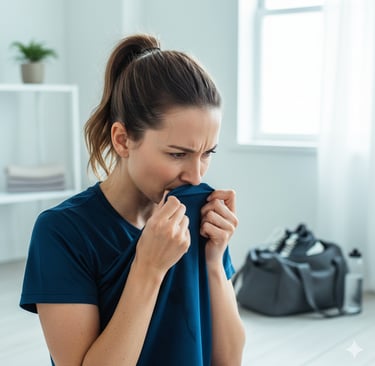
Smelly even after washing?
It’s one of the most common laundry frustrations out there. The culprit isn't a weak detergent, a faulty machine, or aging clothes—it’s the hidden residue trapped deep within the fibers.
What causes it?
Most activewear is made from synthetic fibres that are hydrophobic (they repel water) and oleophilic (they attract oils). They’re great at pulling sweat off your skin to keep you dry — but they also latch onto body oils. That combination creates a perfect storm in a normal wash:
Oils get absorbed: Sweat isn’t just water. It carries body oils, which bind tightly to synthetic fibres.
Water can’t fully flush them out: Because the fabric repels water, those oils stay lodged deep inside the fibres.
Bacteria move in: Bacteria feed on the trapped residues — and that’s where the persistent smell comes from.
Detergent makes it worse: Adding more detergent leaves undissolved residues on the fabric. Instead of cleaning better, it gives bacteria an even better condition to grow.
Standard washing often fails to remove residues from synthetic fibres. When a smell persists after laundering, it is usually because the water was unable to penetrate the fibers to remove the underlying cause.
Vinegar, baking soda and hot water
To deal with stubborn odors, most people reach for the usual hacks: vinegar, baking soda, or a hotter wash. They’re everywhere online, so they must work… right? The problem is that modern fabrics don’t play by old rules.
Fiber Damage: Performance wear relies on elastic polymers like spandex and elastane. The acidity of vinegar and the alkalinity of baking soda can chemically degrade these fibers, causing them to lose their stretch and shape over time.
Thermal Stress: Polyester, nylon, elastane are thermoplastic polymers, hot temperatures can weaken synthetic bonds, leading to shrinkage and a loss of the fabric's wicking capabilities.
Reduced durability: Acids, alkalis, and high heat degrade modern dyes and fabric finishes, fast-forwarding fabric aging. Colours fade, prints crack, and clothes lose performance long before they should.
Inconsistent Results: DIY remedies are difficult to dose correctly. The result? Another wash because the first attempt failed. And the clothes you wanted to wear today… still aren’t ready.
Machine Wear: Frequent use of acidic vinegar can also corrode the rubber seals and gaskets inside your washing machine, leading to mechanical issues over time.
High-tech laundry for high-tech clothes
Expensive performance gear deserves better than vinegar, baking soda, or long hot cycles. Modern synthetic fabrics need a laundry solution as advanced as the clothes themselves. Nanowash uses Japanese nanobubble technology to reduce water’s surface tension, allowing it to penetrate deep into fibers and gently lift residues that standard washing can’t reach. This means water rinses more effectively, reducing the need for harsh chemicals or high heat.
Just connect Nanowash to your washing machine and wash as usual. Inside, it creates a powerful whirlpool that mechanically crushes the air bubbles already in the tap water to generate nanobubbles — no chemicals, no electricity required.