
How to choose my detergent?
Beyond the beautiful package
1/28/20262 min read

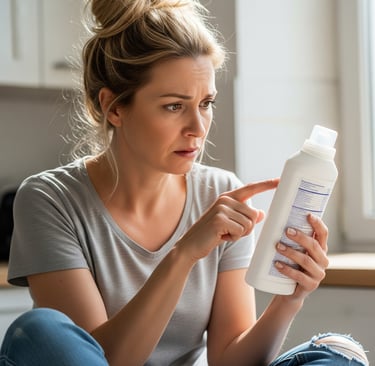
Should I change my detergent?
When clothes smell, feel itchy, or don’t feel truly clean, switching detergent seems like the logical next step. And sometimes, it helps. But often, the problem isn’t the brand you’re using.
Why changing detergent doesn’t always fix the issue
When laundry problems appear, many people respond by switching products. Stronger scents for lingering smells, gentler formulas for sensitive skin, or softeners for stiffness. This approach feels logical, but it often fails because it treats the symptom rather than the cause: a gradual buildup of residues inside the fabric.
Modern synthetic fabrics make this problem harder to solve. Sportswear, underwear, bedding, and blended textiles are designed to stretch and move moisture away from the skin. To perform this function, they repel water. That same property also makes it difficult for water to flush out sweat oils and detergent residues during washing and rinsing.
In practice, this means chemical residues are often responsible for clothes that smell even after a wash with a strong formula, itch even after using gentle detergents, or feel stiff despite fabric softeners. The surface may appear clean, but residues remain trapped deeper in the fibers.
Changing detergents—from mild to strong or the other way around—does not resolve the issue if those trapped sweat oils and chemical residues are never fully removed. Better washing is not simply about choosing a more sophisticated, hypoallergenic, or "stronger" product. It depends on achieving a more effective rinse that can flush residues out, instead of allowing them to accumulate with every wash.
The trap of more detergent
When the new detergent doesn’t solve the problems like lingering smells, itchy clothes, or stiff fabrics, many people respond by using more detergent. This often has the opposite effect. Extra detergent increases the amount of chemical residue that must be rinsed away. When rinsing is incomplete, those residues stay embedded in the fabric—contributing to persistent odors, skin irritation, and laundry that feels rough or uncomfortable after washing.
Another common approach is switching to longer wash cycles or higher temperatures. Hot water can help dissolve detergents and remove surface buildup, but it cannot flush out residues trapped deep inside synthetic fibers. Over time, this leads to accelerated fabric damage: clothes shrink, elastic fibers lose stretch, colors fade, and garments look worn far earlier than expected.
In both cases, the problem isn’t the detergent itself—it’s that modern fabrics are difficult to rinse thoroughly. Without effective rinsing, residues accumulate wash after wash, no matter which detergent is used.
How to get more from detergents
If changing detergent hasn’t solved lingering smells, irritation, or stiffness, the issue may not be the formula. Rinsing is as important as the washing. When residues aren’t fully flushed out, problems return regardless of how mild or powerful the product claims to be.
NanoWash focuses on improving that final step. By using nanobubble technology to reduce water’s surface tension, it helps water move deeper into fabrics and rinse away loosened residues more effectively. This allows your chosen detergent to do its job without increasing dosage, temperature, or cycle length.
The goal isn’t to add more products to your laundry routine. It’s to make the one you’ve already chosen work better, wash after wash.